
Technology showcase · Waste-heat recovery
ExtraJool
Generating electricity from lower-power industrial waste-heat streams.
Active member since December 2023
Understand the technology
Key fact Heat sources from 180°C to 500°C
01 — Understand
ExtraJool technology, in three points
ExtraJool develops a module that generates clean electricity from rejected heat. By targeting lower power ratings and temperatures between 180°C and 500°C, its distinctive market position makes waste-heat recovery accessible to a broad range of industries.
01 The solution
Generating electricity from lower-power industrial waste-heat streams.
02 Technology principle
An external-combustion Ericsson engine with a liquid piston converts available heat into electricity.
03 Applications
- Chemicals and petrochemicals
- Metallurgy
- Cement and lime
- Incineration
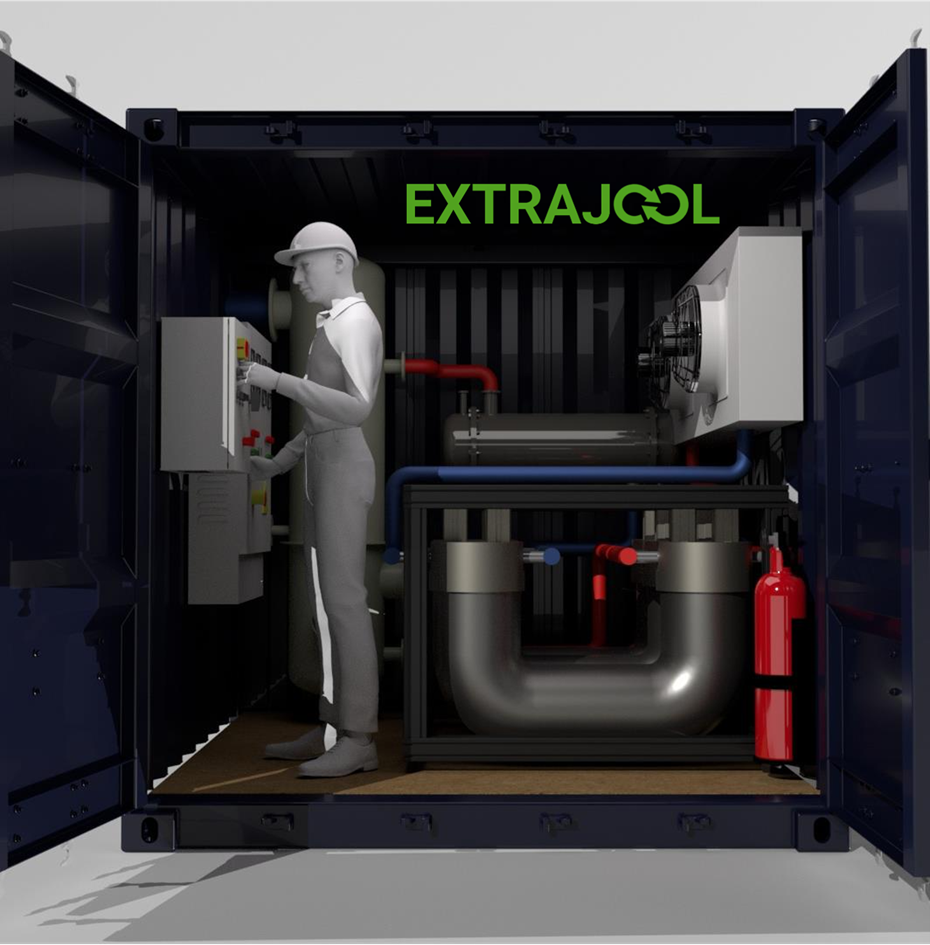
ExtraJool helps decarbonise industry by turning waste heat into clean electricity with a direct economic benefit.
Industry loses around 20% of the energy it consumes through flue gases released into the atmosphere. Affordable recovery tools are not yet available to every industrial operator. ExtraJool develops a module that generates clean electricity from these rejected heat streams. Its focus on lower power ratings and temperatures between 180°C and 500°C opens waste-heat recovery to many more industrial sites. The breakthrough technology originated in public research and combines strong performance with low manufacturing costs.
Turning lost heat into electricity
ExtraJool converts industrial waste heat into electricity using an external-combustion Ericsson engine with a liquid piston. Operating between 180°C and 500°C, the process efficiently transforms heat into electrical energy and is protected by three patents.
The turnkey modules produce clean electricity locally at a fixed investment cost, with ratings from 20 kWe to 200 kWe.
They are suited to chemicals, petrochemicals, metallurgy and steelmaking, non-metallic materials, clay products, ceramics, porcelain, cement, lime, incineration facilities and cogeneration.