
Technology showcase · ORC systems, heat pumps and turboexpanders
Enertime
High-power thermodynamic machines that recover industrial waste energy.
Active member since April 2023
Understand the technology
Key fact ORC systems from 500 kWe to 10 MWe
01 — Understand
Enertime technology, in three points
Enertime is a global specialist in recovering waste energy from industrial processes. It develops high-power thermodynamic machines including Organic Rankine Cycle (ORC) systems, industrial heat pumps and natural-gas expansion turbines known as turboexpanders.
01 The solution
High-power thermodynamic machines that recover industrial waste energy.
02 Technology principle
Depending on the requirement, ORC modules generate electricity, heat pumps upgrade low-grade heat and turboexpanders recover the energy released by gas expansion.
03 Applications
- Industrial flue gases
- Biomass
- Geothermal energy
- Natural-gas networks
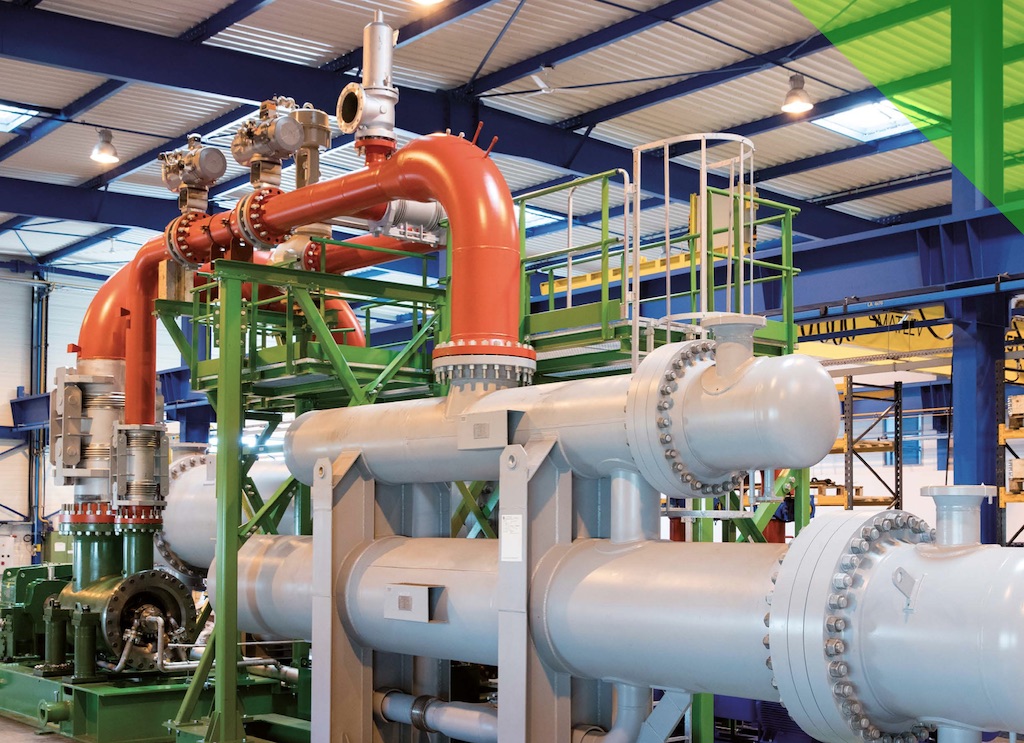
02 — In pictures
See the solution up close
Equipment, architecture and technology identity: visual references that make the solution easier to understand.
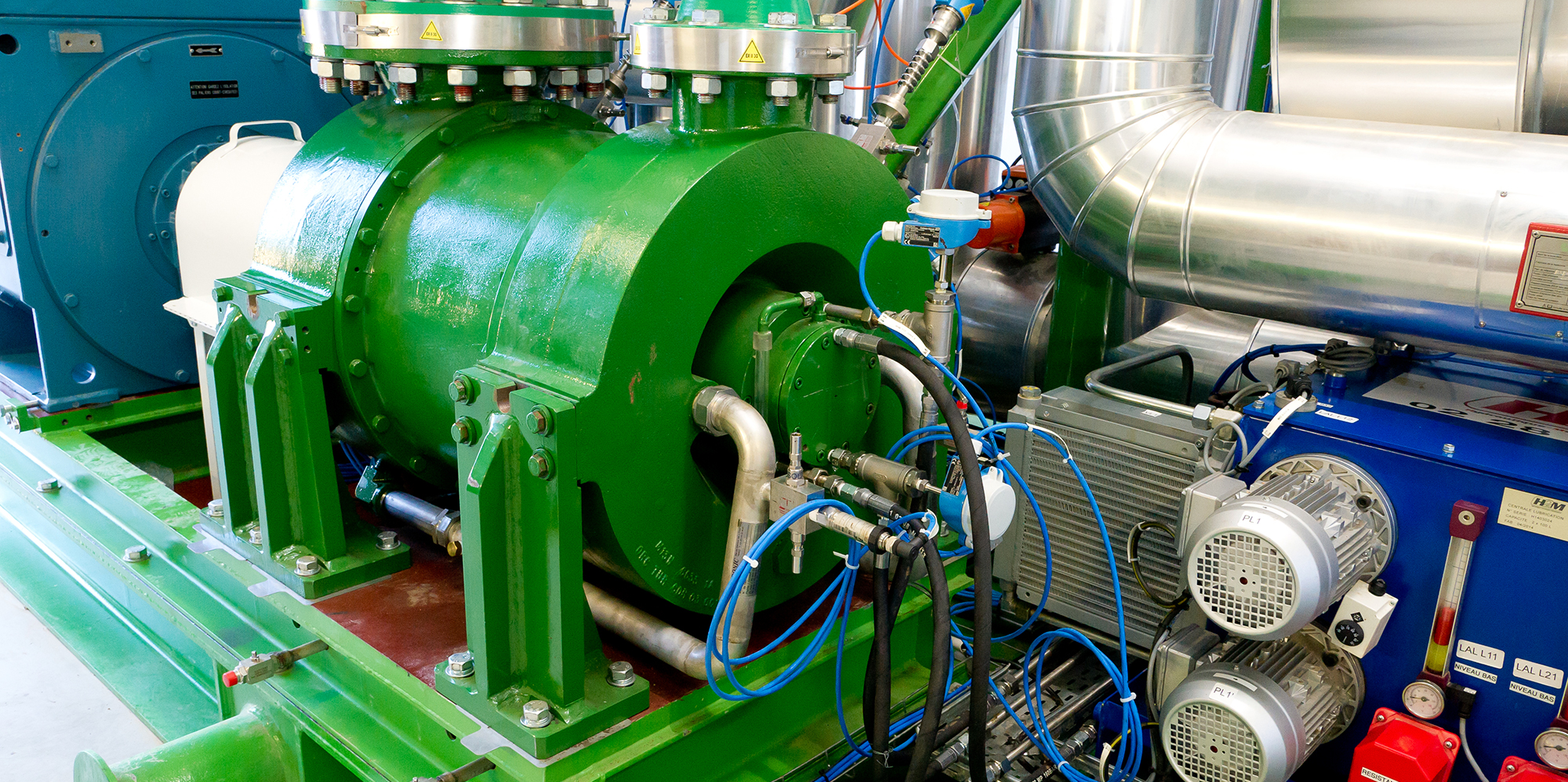
Enertime is a global leader in the recovery and use of residual energy in industry. It develops high-power thermodynamic equipment including Organic Rankine Cycle (ORC) systems, industrial heat pumps and natural-gas expansion turbines.
A message from the President
“France Cleantech Industries was created first and foremost to contribute ideas and put forward proposals that combine the reindustrialisation of France with a faster energy transition in France and internationally. Our association has a twofold ambition: to help create new French industrial champions while enabling existing manufacturers and society as a whole to become more sustainable and therefore more competitive.” — Gilles David, President of France Cleantech Industries and CEO of Enertime.
Enertime’s high-power thermodynamic technologies recover energy that would otherwise be lost. Gilles David, both FCI President and Enertime CEO, places this work within the association’s wider ambition to reindustrialise France, accelerate the energy transition and help industry become more sustainable and competitive.
Organic Rankine Cycle modules
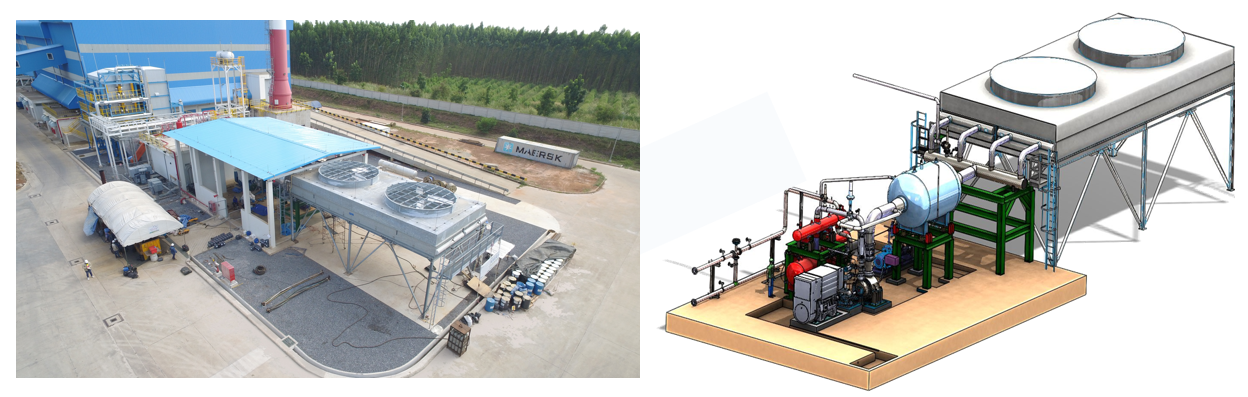
1.8 MWe ORC module using thermal oil — BGES Glass, Bangkok, Thailand
Enertime’s ORC modules convert waste heat into electrical and thermal energy in industrial settings. They can use a wide range of heat sources, including flue gases from 300°C, biomass, geothermal energy and other industrial processes. Available from 500 kWe to 10 MWe, these systems improve energy efficiency and sustainability by recovering heat that would otherwise be wasted. They operate on the Clausius–Rankine cycle, primarily to generate electricity.
Key components include custom-built ORC turbines engineered for robustness, efficiency and low vibration. Heat exchangers transfer energy to the working fluid and are designed around each heat source. Condensers and pumps cool and pressurise the fluid. The automated, flexible modules adapt to variations in source temperature and flow, minimising supervision and operating costs. Enertime’s ORC technology therefore makes a direct contribution to lower CO₂ emissions and more sustainable energy use.
Very-high-temperature heat pumps
Enertime has developed efficient high-temperature heat pumps since 2012. Its demonstrator in Le Mans, using new lower-impact refrigerants, proved the technology before being dismantled. Enertime now markets the system and works with the Push2Heat consortium to accelerate its development.
The company’s industrial heat pumps efficiently produce high-temperature hot water or steam from lower-temperature heat sources. By reducing primary-energy consumption and greenhouse-gas emissions, they provide an environmentally and economically attractive alternative to conventional high-temperature heat generation.
Based on Enertime’s patented centrifugal-compressor technology and industrial know-how, the pumps serve processes in food and beverage, paper, automotive and chemical production. Each 2 MW to 15 MW unit is engineered for efficient, reliable operation at very high temperature.
Typical specifications include a thermal demand of 2 to 15 MWth, R1233zd(E) working fluid, source-side heat exchangers operating from 30°C to 90°C and useful heat output from 90°C to 130°C. Motor ratings reach 4 MWe and coefficients of performance range from 2.5 to 6.0, using one- or two-stage centrifugal compressors.
The new-generation refrigerants have an extremely low global-warming potential below 5 and zero ozone-depletion potential. They are non-flammable and non-toxic, supporting straightforward integration into industrial and district-energy installations.
Natural-gas expansion turbines
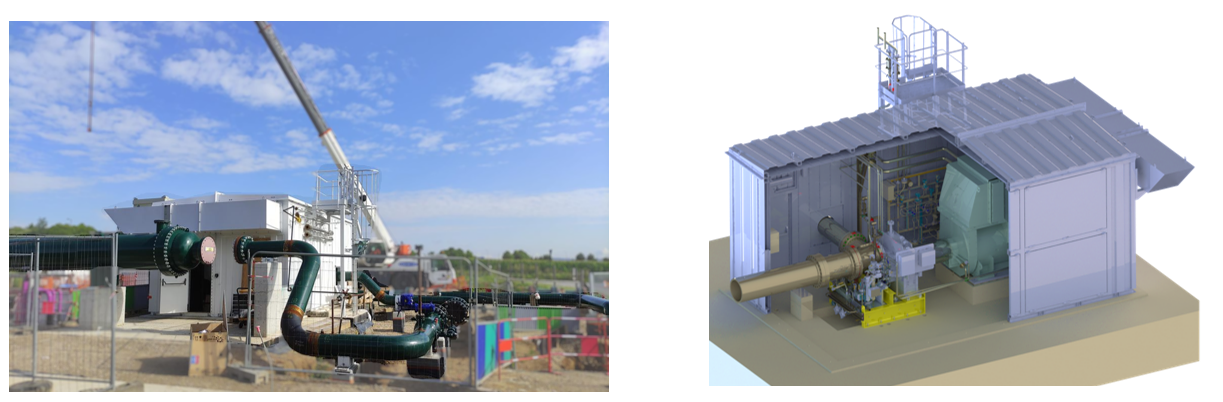
In 2023 Enertime and GRTgaz completed the Tenore pilot site at Villiers-le-Bel. It recovers 2.5 MWe from the energy released as natural gas expands.
Drawing on its turbomachinery expertise, Enertime designs turboexpanders that generate electricity from pressure reduction in natural-gas transmission and distribution. These systems improve network energy efficiency and economics, while producing electricity and, in some cases, useful cooling. Each installation is optimised around site constraints and the heat available.
Innovative financing solutions
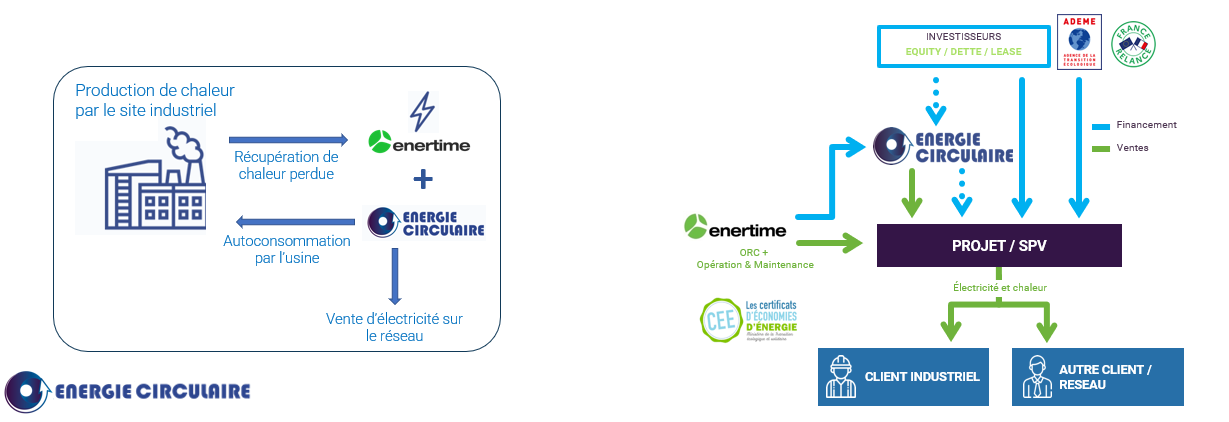
France’s Energy Savings Certificate scheme helps finance energy-efficiency projects and stimulates industrial investment. Energie Circulaire, an Enertime subsidiary, uses this framework and other support mechanisms to make French-designed and French-manufactured industrial-efficiency equipment available as a service.
After several years developing ORC technology, Enertime created Energie Circulaire as its first subsidiary. Its Energy Service Company model removes the initial investment barrier and gives customers easier access to industrial energy-efficiency technologies.
The team combines technology expertise with renewable-energy project finance. Experienced engineers and consultants focus on customer satisfaction and project economics, with particular expertise in heat recovery and mechanisms such as Energy Savings Certificates and ADEME’s Heat Fund grants.
For energy-intensive factories, efficiency remains one of the most powerful levers for moving towards a low-carbon economy. Energie Circulaire finances projects that combine heat and power recovery, helping manufacturers reduce energy bills and optimise their sites. This third-party-financed circular-economy model also supports local economic resilience while reducing environmental impact.